.jpg "logo title")
Workshops &Classes
.jpg "image title")

.jpg "image title")
.jpg "image title")
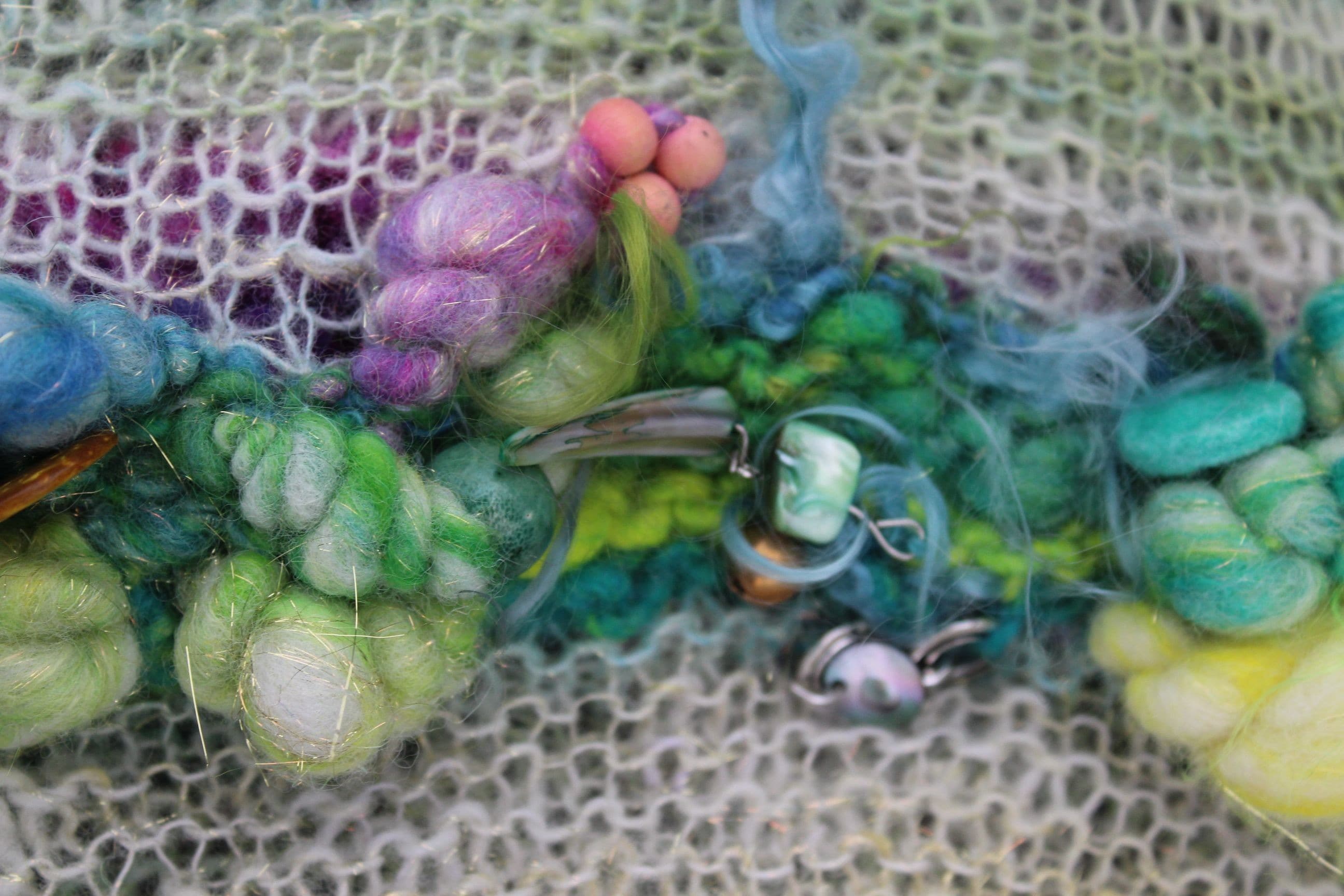
Sewing Room Floor – Spinning and Upcycling Fabric, Beads and Trimmings
DescriptionLevel BeginnerMinimum No. of Participants 3Maximum No. of Participants 15–20Duration 3–6 hours (This Workshop works best as a 6-hour class so we can learn to core spin 1st.)Learning Outcomes Participants will learn:• The students will learn to spin fabric in a way that the twist is handled and we do not end up with hard rope like yarn.• The students will learn different methods of adding in objects. • An understanding of design and balance in incorporating jewellery and hard objects.
At the conclusion of the workshop, the participants would expect to take away samples of yarns.
Materials Required by Participants
• Spinning wheel with large orifice, two bobbins, lazy Kate.• Hand carders.• Scissors.• Sewing needle and thread.• Tray for bit and bobs ready to spin.• 4mm crochet hook, optional .06 crochet hook.• Hand towel.• Loosely woven scarf, hopefully tassel or two to combine.• 50–100g wool/fibre.• Angelina/firestar/nylon bling (optional).In this workshop we will learn to incorporate fabrics, threads and things found on the sewing room floor into our spinning. This is a great way to integrate recycling into our craft. There are bound to be some amazing clothes in your own wardrobe, and/or local op shop, where the style may be dated, but the fabric, trims and buttons are delightful. Do check the jewellery sections out as well.I will have garments showing the use of this type of yarn and we will discuss design and balance of incorporating jewellery and hard objects. I will have samples and garments using natural dyes as well. This could be a half day or full day workshop.


Making an art Batt & Spiral plyed Yarn
This is an excellent class to learn to make & spin an Art batt ,great introduction to spinning art yarn class ,3-4 hour class.Materials Required by Participants• Spinning wheel with large orifice recommended but not essential, 2–3 bobbins , Lazy Kate, niddy noddy.• Hand carders if you have them, drum carder if you have one (one between 2–3 people).• Hand towel.• 20g of Polwarth or Corriedale wool (or Merino but no super wash so might be best to avoid).• 80–100g of different coloured fibre for your batt (no super wash/machine washable).• Optional-small amounts of Angelina, fire star, nylon sparkle, smooth silk, bamboo, Tencel, banana silk, rose fibre.Materials Provided by Tutor • 7 sets of hand carders if requested.• 2 drum carders if requested.• 3 spinning wheels, and 2 Majacraft flyers if requested.• Fibre kits aviable if prebooked 2 weeks before the classMaterials FeeAdvance Preparation Find some colour inspiration and/or look up batts on the internet to get an example of colours to choose.Classroom Facilities • Bucket of hot water and a bucket of cold water or access to laundry/bathroom.• Clothes horse or line for drying.• Table for display.• Table for fibre (optional).• Tables for drum carders.• Chairs; one per student and me at least.tt and Spiral Plied YarnMaterials Required by Participants• Spinning wheel with large orifice recommended but not essential, 2–3 bobbins , Lazy Kate, niddy noddy.• Hand carders if you have them, drum carder if you have one (one between 2–3 people).• Hand towel.• 20g of Polwarth or Corriedale wool (or Merino but no super wash so might be best to avoid).• 80–100g of different coloured fibre for your batt (no super wash/machine washable).• Optional-small amounts of Angelina, fire star, nylon sparkle, smooth silk, bamboo, Tencel, banana silk, rose fibre.Materials Provided by Tutor • 7 sets of hand carders if requested.• 2 drum carders if requested.• 3 spinning wheels, and 2 Majacraft flyers if requested.
Materials FeeAdvance Preparation Find some colour inspiration and/or look up batts on the internet to get an example of colours to choose.Classroom Facilities • Bucket of hot water and a bucket of cold water or access to laundry/bathroom.• Clothes horse or line for drying.• Table for display.• Table for fibre (optional).• Tables for drum carders.• Chairs; one per student and me at least.
Materials FeeAdvance Preparation Find some colour inspiration and/or look up batts on the internet to get an example of colours to choose.Classroom Facilities • Bucket of hot water and a bucket of cold water or access to laundry/bathroom.• Clothes horse or line for drying.• Table for display.• Table for fibre (optional).• Tables for drum carders.• Chairs; one per student and me at least.
.jpg "image title")

Knitting with Textured Yarns and
Knitting Texture with Traditional Yarns
Description
Level AnyMinimum No. of Participants 1–3Maximum No. of Participants 15–20Duration 3-4 hoursLearning Outcomes Participants will learn:• Methods to incorporate bulky and textured yarns without strangling the yarn.• Design balance and placement.• How to work with yarns that are thick and very thin.• How to add trims with different methods.At the conclusion of the workshop, the participants would expect to take away samples of creative knitting.Materials Required by Participants A range of knitting needles and crochet hooks 4-7mm, circular needles size 4.5/6mm and DK.A range of yarn, old balls are perfect, approx. 100 grams, stitch markers, scissors, darning needle, 2 stitch holders (optional).Materials Provided by Tutor Range of knitting needles and crochet hooks, textured/art yarns, yarns.Materials Fee To be advised.Advance Preparation Cast on 20 stitches in approx DK/10 ply on size 4.5–6mm needles and knit 5–10 rows. Place on stitch holder. Please do two pieces like this.Classroom Facilities Display table ; tables with enough space per person as needed for writing; chairs.This is a creative knitting workshop. You will need to be able to cast on, perform garter stitch and stocking stitch. I started designing this class to incorporate textured yarns into knitted garments and discovered that textured knit.
Level AnyMinimum No. of Participants 1–3Maximum No. of Participants 15–20Duration 3-4 hoursLearning Outcomes Participants will learn:• Methods to incorporate bulky and textured yarns without strangling the yarn.• Design balance and placement.• How to work with yarns that are thick and very thin.• How to add trims with different methods.At the conclusion of the workshop, the participants would expect to take away samples of creative knitting.Materials Required by Participants A range of knitting needles and crochet hooks 4-7mm, circular needles size 4.5/6mm and DK.A range of yarn, old balls are perfect, approx. 100 grams, stitch markers, scissors, darning needle, 2 stitch holders (optional).Materials Provided by Tutor Range of knitting needles and crochet hooks, textured/art yarns, yarns.Materials Fee To be advised.Advance Preparation Cast on 20 stitches in approx DK/10 ply on size 4.5–6mm needles and knit 5–10 rows. Place on stitch holder. Please do two pieces like this.Classroom Facilities Display table ; tables with enough space per person as needed for writing; chairs.This is a creative knitting workshop. You will need to be able to cast on, perform garter stitch and stocking stitch. I started designing this class to incorporate textured yarns into knitted garments and discovered that textured knit.
Introduction to Long Draw Spinning and Spinning Short Fibres


DescriptionLevel IntermediateMinimum No. of Participants 3Maximum No. of Participants 15Duration 3 hours , but this is a great 6 class moving onto short fibresLearning Outcomes Participants will learn:• Understanding of, and confidence to use, hand carders and carry on working with longdraw.• Understanding of a woollen yarn.At the conclusion of the workshop, the participants would expect to take away spun samples.Materials Required by Participants Spinning wheel, two bobbins, one knitting needle, hand carders, hand towel, empty loo roll, pen.Materials Provided by Tutor • Fibre kit. • I can bring 7 sets of hand carders.Materials Fee To be advised.Advance Preparation None.Classroom Facilities Hot and cold water, either on tap or in buckets.We will experiment with blending and using short fibres which will include both animal and plant, depending on length of the class.We will learn to use hand carders to make rolags.We will spin long draw; discuss and attempt different methods of long draw


Spiral and Beehive Yarns
Decription
This is the twist workshop; learning to have fun with it. In this workshop we will spin two yarns that are very similar. One will be from a woollen preparation, and the other from a worsted preparation. This workshop is planned to slowly teach your fingers to mould the fibres.-This workshop could be combined with the Batt and Spiral plied yarn workshop for a 5–6 hour workshop Level Beginner/IntermediateMinimum No. of Participants 3Maximum No. of Participants 15Duration 3-4 hoursLearning Outcomes By the end of the workshop, participants will:• Be able to spin from a batt.• Be able to spin thick and thin and lumpy bumpy yarn.• Be able to construct a stable plying thread for art yarn.• Be able to ply for effects.• Know how to set their yarn for durability.• We will also talk about uses for the yarns, with examples.At the conclusion of the workshop, the participants would expect to take away one skein of yarn and a sample.Materials Required by Participants • Spinning wheel with a large orifice.• 60–100g batt, no superwash.• 40g of fibre corriedale ,polwarth, merino,no super wash.• 50-100g combed top, corriedale is best.• 2–3 bobbins.• Lazy Kate.• Niddy noddy.• An old hand towel.Materials Provided by Tutor • Three Spinning wheels and two majacraft flyers if requested.• Student can pre-order kitsAdvance Preparation None.Classroom Facilities A small clothes horse or somewhere to hang small amounts of yarn to dry.Hot and cold water. Can be bathroom, laundry or buckets.
2 chairs per person
.jpg "image title")
.jpg "image title")
Tail and Lock Spun Yarn Designing
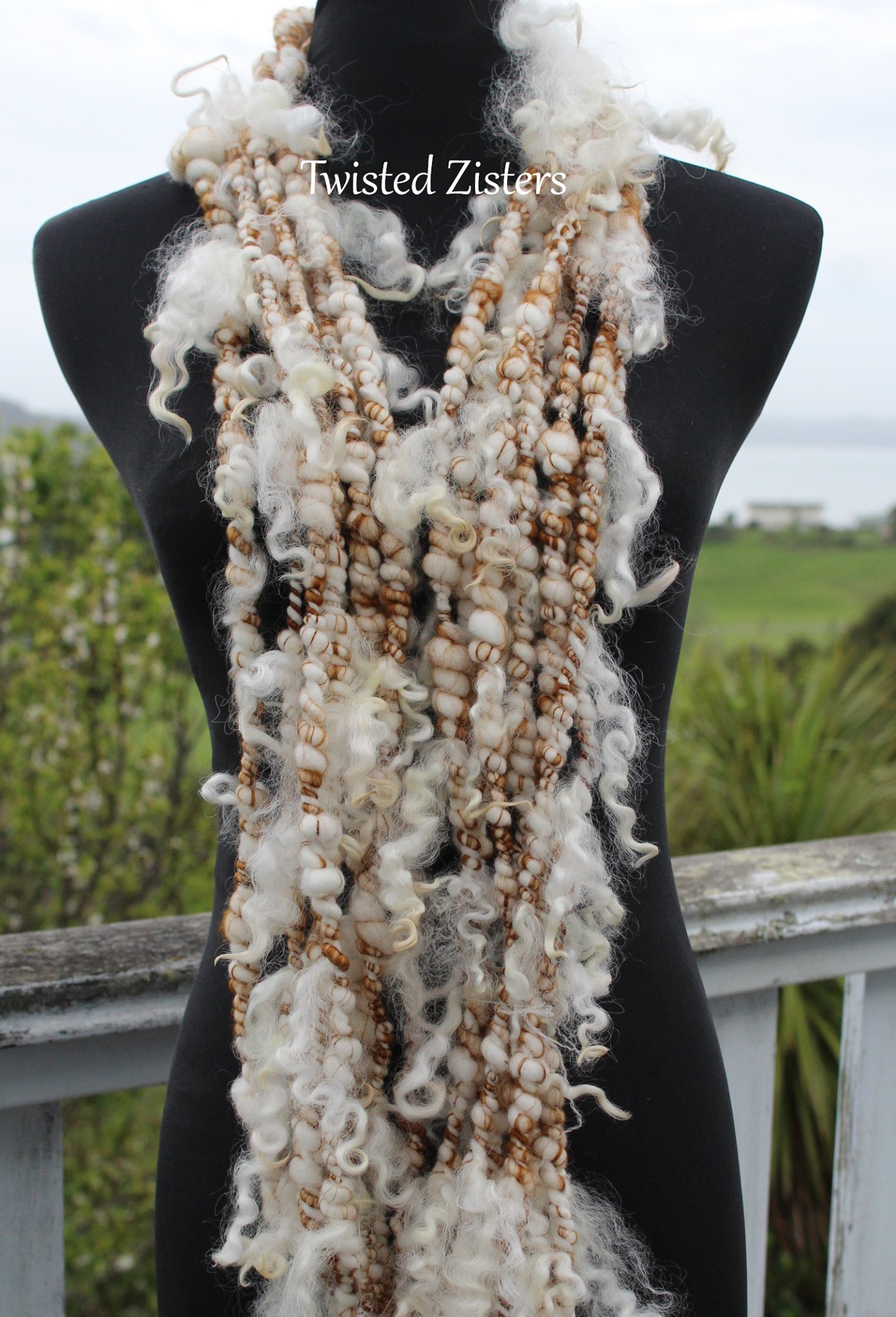
DescriptionAvailable for: National, local/area, travelling tutorLevel IntermediateMinimum No. of Participants 3Maximum No. of Participants 15–20Duration 3 hoursLearning Outcomes Students will leave with the techniques to design yarn in different weights with different locks, and the knowledge of how to incorporate them in garments without the bulkiness associated with these textured yarns.I have put intermediate skill level as some knowledge of spinning from the side would help to get the most out of this workshop, but novice spinners are normally capable of picking this up faster than experienced spinners therefore novice-intermediate.At the conclusion of the workshop, the participants would expect to take away samples of yarns.Materials Required by Participants • Spinning wheel with orifice large enough for locks to pass through.• Lazy Kate.• Three bobbins, including the two with singles on.• Tray (optional).• Crochet hook.• Niddy noddy (optional).Materials Provided by Tutor • I can supply 10 trays if requested.• 130g of fibre (in kit).• Threads/holder.Materials Fee To be advised.Advance Preparation One bobbin with approx. 15g of spun fibre, and a second bobbin with approx. 20g of spun fibre. Just your normal default yarn. Please mark the bobbin with 20g.Classroom Facilities Table for displays, table for fibre, chairs two per person if enough space.• Looking at different breeds and how the different locks react in the yarn and how to tackle them. • Discussion of where to source fleece for this type of yarn and how to clean and prepare it.• Exploring two methods of tail spinning, lock spinning, and add-ins such as fabric/leather. • Instructions for a tail spun vest and examples of how to use these yarns in garments


Dye in the Bag
Dye Yarn in a Bag – Dyeing for fast instant results Join Annette Montgomery for what is the easiest, fasted yarn dyeing technique that is accessible to everyone – dyeing yarn in a bag!Annette will cover the fundamentals of dyeing superwash wool yarn and then you will have an opportunity to get your hands dirty and dye your own yarn during the class.
Perfect for those wanting to try dyeing for the first time or learn a technique which is less fuss and almost zero mess.
This is a great beginner session
3 hour class


Witches Cauldron
This workshop follows up the Yarn in the Bag class with a more detailed practical theory of yarn dyeing across multiple mediums.How do different fibre react to the dyeing process, what you need to know, the differences between yarn dyeing and dyeing fibres for spinning or felting.She will discuss colour, heat and how different medium react to all the variables that make up the magical world of hand dyed yarns and fibres.This class will cover beyond the basics and give you the knowledge to go beyond the bag dyeing to something more adventurous. 3 hour class